The Story of The Book
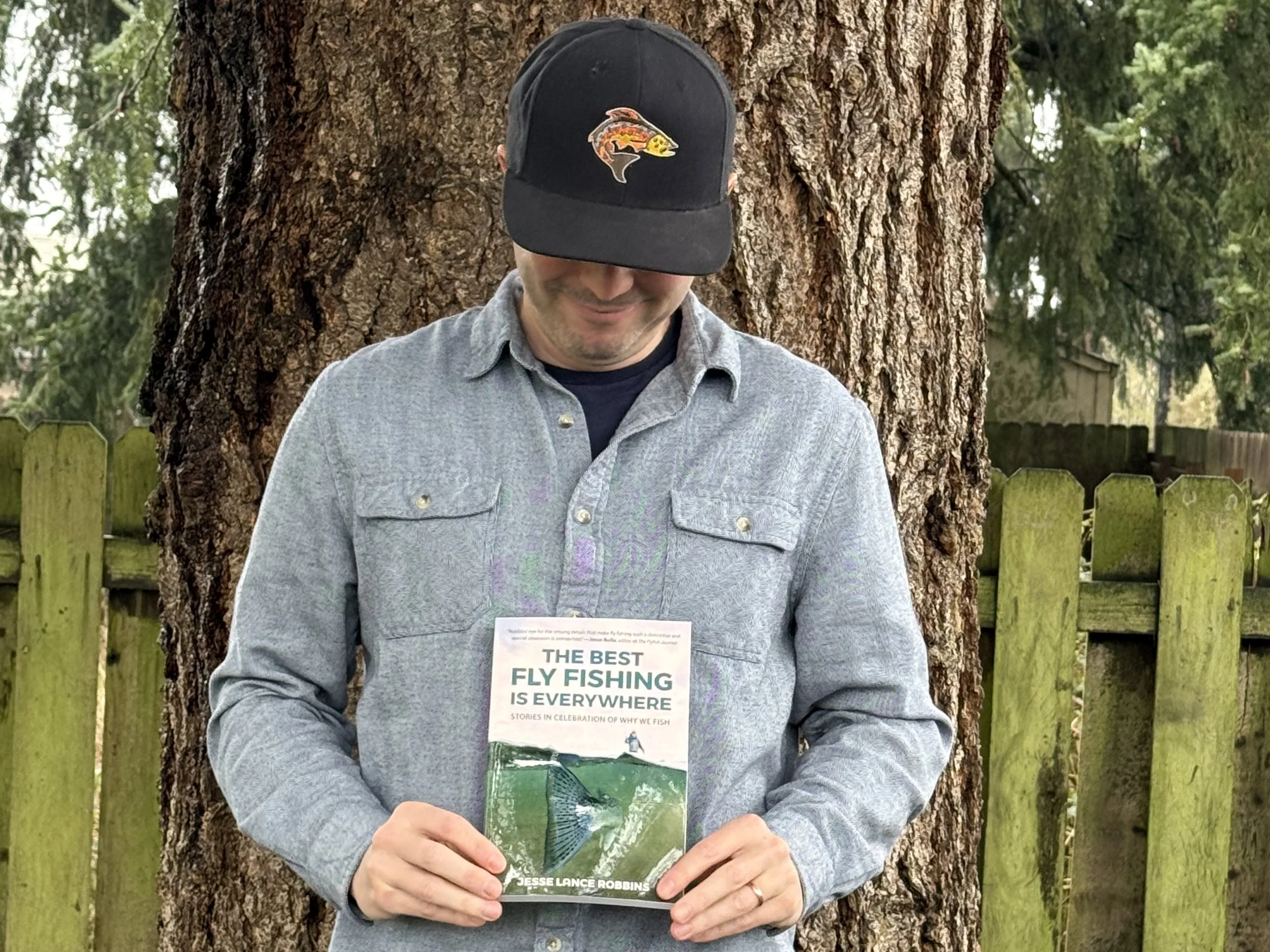
The Best Fly Fishing is Everywhere is a physical manifestation of my angling, storytelling, and writing life to date, which is just about my entire life. Considering that the book was published on Feb. 24, 2026, and I was born on Aug 31, 1984, we might anticipate that the book be longer than 180 pages! To that point, I’ll just say: there’s plenty more where that came from; but, it’s not all as good. What follows is a recount of my angling, storytelling, and writing journey to date, which led to this book; again, by no means comprehensive, but the highlights are contained. My intent is to document this winding road, so that I can remember it myself and also in hopes that it may be of use or helpful, in some way, to other anglers, storytellers, writers, and readers.
To this latter detail, I will add: I welcome conversation, comments, and questions from other writers, storytellers, anglers, conservationists, and combinations thereof, and if I can be of help, I’ll try! Just email me.
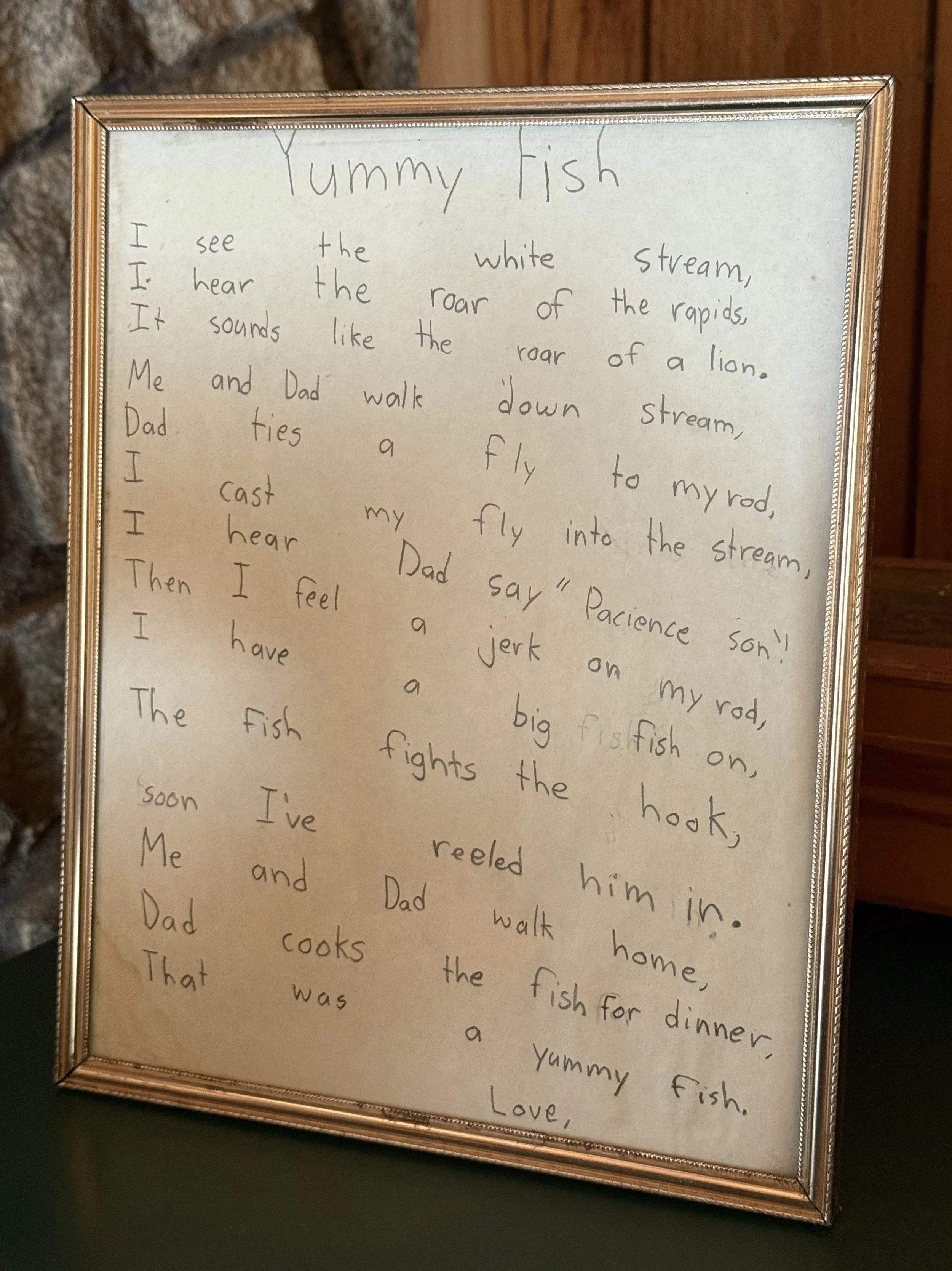
I started fishing at the age of four, and at nine received my first fly rod and reel as a Christmas gift from my parents. In between those years, I fished with various forms of spinning gear, lures, and bait, and I have a few fuzzy memories of fishing for sunfish and bass with a bobber and worm with my father from a canoe. My first written fishing story was completed in that timeframe, following one particular trip to the St. George River, which runs behind the house where I grew up. That day, I caught my largest brook trout to date by following the close instructions from Dad, and we took it home that evening for dinner. Shortly thereafter, I penned “Yummy Fish,” a one-page summary and celebration of the outing. The story was later ‘self-published’ as a present to my father: hand-written and picture-framed. I recall being strapped for time, the result of which is that I didn’t keep the lines of text straight or parallel on the page. This piece lives at my parents’ house today. This piece lives at my parents’ house today. In my mind, this brookie was caught on a worm, but the story claims it was fly-caught; I find such a discrepancy noteworthy, though perhaps not surprising, and not entirely inconsistent with the retelling of facts in some of my own or others’ angling writing.
For the next 15 years or so, I took countless camping trips into the woods of Maine with my parents and family friends, and numerous fishing trips with my father. Many of these fishing trips were with fishing friends of my father, and their sons. In, on and around campfires, beaches, canoes, cabin porches, and pickup trucks, I absorbed a steady supply of fishing and outdoor tales. These stories were as impactful as the trips themselves, and while the punchlines and references were often lost on me because of my youth, I always looked forward to evening when the storytelling would begin. Spirited debates over the size or number of fish, initiated by listeners to the tales, were not uncommon nor unwelcomed.
In high school, I took a job as a salesman at Maine Sport Outfitters, a nearby outdoor store that had a fly fishing section inside. My manager was the late Paul McGurren, a local angling legend, well-respect and well-known within our fly fishing community. Paul, though quiet and composed compared to some of my father’s friends, was a great storyteller and, though I didn’t know it at the time, was a fly fishing mentor. The other local anglers who came to the shop to buy gear and chat with Paul became acquaintances of mine and I got to absorb their tales as well. Occasionally, I was able to contribute one of my own, though it was also part of the job at times. I also began to learn how to educate anglers and sell them appropriate fly fishing equipment; fishing stories were often included with the transaction.
Among the fly fishing items sold at Maine Sport were some books, and between there and my father’s bookshelves, I came to recognize one name in particular: John Gierach. His collection Sex, Death, and Fly Fishing had been recently published and the title alone was especially intriguing for me, as a young man of 16 or 17 years. At the time, I wasn’t even sure that you could say “sex” out loud without offending someone, and that someone would also refer to “death” in the same sentence was beyond me. But, according to the title, these two concepts must also be related to fly fishing, which I knew was a good thing, so I started reading. Any reader of Gierach won’t be surprised to learn that I immediately liked what I read. He put into words and on the page, what I was thinking and feeling about fly fishing, even though I didn’t really know it.
As one particular example, I came to the essay “Expertizing,” and realized that Gierach was writing about me and the people I was interacting with while working at Maine Sport. And what’s more, I myself was guilty of expertizing! He wrote:
“Expertizing means acting like an expert. Not necessarily being an expert, mind you, but acting like one. There’s a difference. It’s something we all slip into from time to time when we realize that we know just a little bit more about fishing than the person we’re talking to or, worse yet, that we really don’t know any more, but the person is willing, for one reason or another, to believe we do.
The symptoms are painfully obvious. When a question is asked we clear our throats, square our shoulders, glance briefly at the ceiling, and begin with, “Well now…” as if we’re consciously pulling our minds down from some great height.”
The line about glancing at the ceiling floored me. I’d seen it done and had done it on the floor in the fly shop numerous times. Gierach was so good, and I kept reading.
After high school, I entered Bates College and promptly joined the Bates Fishing Club. At our first meeting, a collection of twenty-something undergrads sat around a dormitory living room, passing cheap, light beer and cookies while introducing ourselves, sharing a few fishing stories, and planning our club trips. The people I befriended in the BFC are among my closest to this day. We had a very active club email list that reached a subscribership of 300-plus; considering the entire student body was around 1,800, we thought that was pretty good. Our club email list became a forum for written wordplay, as we’d do our best to recruit people to come on our next fishing trip or attend our next party, or try to one-up the most-recent fishing report that had been sent by one of our friends. One of our more tech-savvy members somehow figured out how to change his ‘reply-to’ name and address to the college president! That email made us all think twice about what we wrote to the list.
Upon graduation in 2006, BFC alumni dispersed around New England, the country, and even the world, and we needed a good way to stay in touch and share our fishing stories. Blogs were coming into their own at the time as a popular medium for online information-sharing and we followed the lead of several, including Flies and Fins, Buster Wants to Fish, The Fly Fishing Nation, and a few others, and started our own: Solid Hookups. We opened up the blog to anyone affiliated to the BFC in any way, and at its peak, we had 20 or so active contributors who were cumulatively posting stories, reports, photos, and sharing fishing-related information almost daily.
In 2009, after working and saving money for three years, I left the States for New Zealand and an extended fishing trip. I ended up spending over four months in the country, traveling my way around the South Island by following trout rivers. Just before leaving the States, I started a personal blog called Seek the Freed, which is a take on a phrase that my friend Keith coined about the BFC: For those who seek the freedom of the water. Though I typically went a week or more in between WiFi, I wrote while ‘offline’ and posted on the blog when I came into civilization.
During the summer leading up to my departure, through the Buster Wants to Fish blog (I believe), I came to acquire a copy of Miles Nolte’s just-released book The Alaska Chronicles. I ate it up, and the book served as important motivation and inspiration that I might turn my writings into something more formal and permanent—like a book. I affixed the sticker that came to the book on my laptop as a constant reminder of what might be possible.
Another important thing happened in New Zealand: with ample time to myself after dark, I started reading in earnest. In fact, while on the flight there, I started reading David James Duncan’s The River Why. I wish I could remember how I heard about the book, or from whom, but the book and its author were—and continue to be—profoundly impactful. In a hostel in Christchurch, I read, “The once-monthly fisherman adores his rare day on the river, imagining that ten times the trips would yield ten times the pleasure. But I have lived the gallant fisher's life, and learned that not fishing is crucial to the enjoyment of fishing: fishing is a good thing, but too much of a good thing is a bad thing." These were sobering lines to absorb while setting off on several months of dedicated, solo angling travel. In addition, The River Why opened my eyes to possibilities and opportunities: from a fishing life, as a young man, as a person, and as a writer. The book remains my most-read. I even have a tattoo inspired by its cover artwork.
By this time, fly fishing and writing had each become practices for me, and they had also become linked. Writing about my fishing (and whatever else happened while on the way there or back) was a way to process and think about what had happened on the water, and a way to share the stories with my family and friends back home, which kept me connected to them. I distinctly recall an evening in Queenstown when, following a rowdy house party, I came back to our friends’ apartment to see a new blog post on Solid Hookups from a couple buddies who had just come back from offshore fishing on the Cape; their great writing made me feel like I’d been on the trip with them.
After my travels in New Zealand, I bounced around the States for a while before landing at the 4UR Ranch in Colorado as a fishing guide, and I kept writing and posting on Seek the Freed while there. Looking back on those years, my frame of mind in that time period, and reading what I wrote is always entertaining and enjoyable, and I’m grateful that those thoughts were captured. Similarly, both blogs now serve as an archive of sorts that friends and I can return to when we can’t remember the details of a particular trip, or want to revisit one.
Following a couple seasons at the 4UR, I took a job at Far Bank Enterprises on Bainbridge Island, Washington. Working in the fly fishing industry offered me ample chances to travel to and fish in new places with exceptionally talented guides, anglers, and casters, and my learning curve was long and steep. In other words, I had plenty of fodder for fishing stories. One weekend, on a whim, I realized that it was possible to submit stories for consideration of publication in fly fishing magazines—specifically, The Drake Magazine. A few years prior, I’d joined their online forum community and came to know the culture and spirit of the magazine. So, I penned an essay and fired it off to their “submissions” email address. Several months later, I got an email back from the magazine’s founder and editor, Tom Bie. He wanted to run my story.
The fact that my very first magazine submission was selected for print is not lost on me; I know this is not the norm. I can’t say exactly why Tom liked it enough to run it, but I’m thankful he did, and I’m also extremely thankful that he was willing to work with me in the following years. Moving forward, whenever I submitted a piece and he decided to run it, I asked repeatedly to be involved in his editing process so I could learn from him. He didn’t always oblige, but he did often enough that I did indeed get better at writing.
Through Tom and The Drake, I started another learning curve—that of fly fishing writing. I became more aware of other publications, their editors and frequent contributors. At the same time, in Seattle, a remarkable event series had just begun: Writers on the Fly. I attended several of these in-person fly fishing reading events, and was blown away by not only how good the writing was, but how good the readings were. I started meeting some more writers and editors, asking questions and for help, and a few more doors creaked open. Eventually I got connected with the team at The Flyfish Journal and started submitting essays to them. There, I met then-editor Steve Duda and now-editor and founder of Writers on the Fly, Jason Rolfe. These two remain some of my closest angling-writing friends.
For the next half-dozen years or so, I kept writing and submitting stories to The Drake, The Flyfish Journal, and other magazines. Through work, I’d ended up in southern Oregon, working for Fly Water Travel, a fly fishing travel agency. Then the COVID pandemic began, and it’s probably obvious to understand that the business of travel agencies changed dramatically. So much so, that our entire staff was moved to four days a week to cut costs. I took this ‘extra’ time as a chance to start the book writing process in earnest, and got my dozens of stories and ideas, in all their forms—published, draft, previous blog post, an idea only, etc.—organized into a spreadsheet that I could reference and track my work.
This exercise was helpful for a variety of reasons, but mostly because it put ‘the book’ into a palatable and understandable body of work to be completed, some of which was nearly- or already done. However, my progress on the book stalled out for the next couple years, as my day job changed and we moved across the country. Still, the spreadsheet didn’t go anywhere.
In the fall of 2022, following another job change and move across the country, I decided to take some time off from working full-time to complete a manuscript, and learn about the publishing process. The spreadsheet that I’d made several years prior became my most-used document as I charted progress, culled some story ideas and added others, submitted pieces to magazines, and racked up the word count.
Concurrently, I began to learn about traditional and self-publishing processes, and the requirements, challenges, costs, timelines, and pros and cons of each. While at first I intended to self-publish my book because it sounded like an interesting creative process in and of itself (in addition to the writing of the book), at some point along the way, I changed course and pursued a traditional publishing press and partner. My reasoning was primarily because I wanted to see if I could actually make it happen—i.e., convince a publisher (between my writing, vision, and outreach plans and ideas) to invest in me. Further, I also wanted to learn more about the traditional publishing industry, and I knew that if I were to secure a publishing deal, there would undeniably be benefits to the book itself, in terms of marketing, sales, and distribution.
By summer of 2023, I had a manuscript that I felt was ready to share with a small group of ‘trusted readers.’ The final push to complete that version was completed at PLAYA Summer Lake, “a place for art and science,” located in the central Oregon high desert. Inspired by the natural setting, solitude, lack of connectivity, as well as the volumes of books that were completed, to some degree, at PLAYA, my productivity shot through the roof while on site. Returning home from that trip, I sent physical copies to ten or so friends, authors, writers, editors, anglers, conservationists, and combinations thereof. While they read the manuscripts and made their edits, I began preparing my materials to submit to publishers: cover and query letters, proposals, overviews, outreach plans, etc.
I’d be remiss if I failed to mention the Freeflow Institute, an organization organizing and fostering writing workshops based, in some form, in the outdoors. As I prepared my manuscript and publisher submission materials, I took an online workshop from them, and my take-aways were many: not only did I learn some writing tools and chops, and got great direction on my submissions, I connected with the Freeflow community, which has been equally beneficial and enjoyable. (I’ve since taken two other online Freeflow writing workshops.)
Some time while in the manuscript drafting stage, I had a phone call with Kirk Deeter, the author and longtime editor of Trout Unlimited’s TROUT Magazine. Kirk kindly fielded my general and specific questions about the book writing process and publishing, but made no mistakes about the time commitment required as well as the (limited) potential financial return. He went on and offered what seemed to be, in the moment, a summary of all the reasons not to try to publish a book; why it wasn’t worth it. But this was by design, for when he finished, he said something to the effect of, “If, as I’ve been telling you all these reasons why you shouldn’t write a book, you’ve been saying to yourself, ‘I’m going to do it anyway,’ then you should try to make it happen, and you will.” And that’s what happened.
What followed over the next year-and-a-half were three rounds of submissions to groups of 12 to 15 publishers at a time. All the while, I continued editing and honing the essays and chapters in the manuscript, as well as my submission materials. Most publishers responded within their stated time frame, kindly rejecting my manuscript. A handful never responded. Three asked for additional writing samples, and appeared to be seriously consider accepting my book, but those publishers eventually passed. One publisher expressed great interest within 24 hours of my initial submission, and we spoke on the phone within the week. A couple months later, I signed a publishing contract with Hatherleigh Press and a timeline for the next steps of the book was set.
The contract signed, I had several remaining tasks—write, cull, and edit; determine the order and flow of the chapters; and, contribute to the book design elements (front cover, back cover and interior artwork)—and these steps took place over the course of about eight months. By far, the most difficult of those, even though I knew I’d eventually have to do it, was to sign-off on the manuscript text. The publisher brings many great things to the table for the author, and deadlines are certainly among them.
The journey of this book has been filled with education and surprises. In terms of the latter, it’s been interesting to note that on two distinct occasions, I subconsciously resisted what I ultimately yearned: when the contract for the book arrived in my inbox, I questioned whether or not to sign it; and, when I was to turn in my final edits to go to print, I wondered whether it was all good enough to be made into a book. Perhaps every author has such doubts.
In one of my early conversations with the publisher, as we negotiated and I considered the contract, the owner said to me, “Is this book going to change your life? No. Are you going to retire and spend the rest of your days fishing? No. But are you going to feel really good when that box of books arrives at your door, and you start giving them to your friends? Definitely.” These words have proven to be true: to date, the most enjoyable and rewarding parts of this book writing process have been sharing it with family and friends, and hearing from them as they receive the book and start to make their way through it.
If, in absorbing the book, readers have smiled or chuckled, recalled a memory of a past fishing trip or began the planning of another one, or in any way further considered and deepened their relationships to water, fish, natural places, and/or those with which they take to the water, then I will consider the project a success. The book also serves as physical documentation and celebration of the moments, experiences, places, and people that I’ve been fortunate to get to have connections and relationships with—a gift of thanks to all.
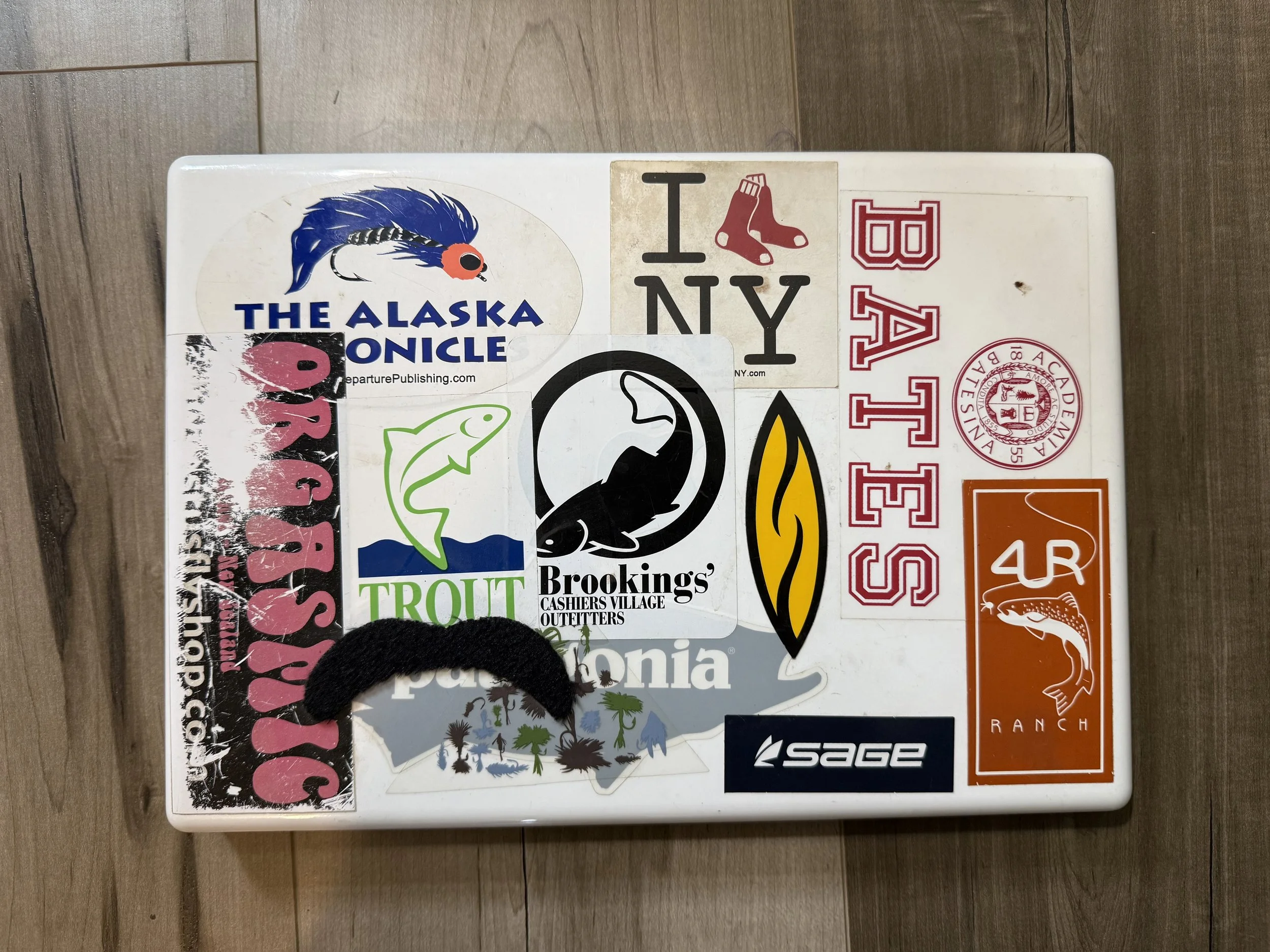
The laptop I brought to, and wrote with, while in New Zealand and in the years that followed. Note the The Alaska Chronicle(s) sticker—additional inspiration.
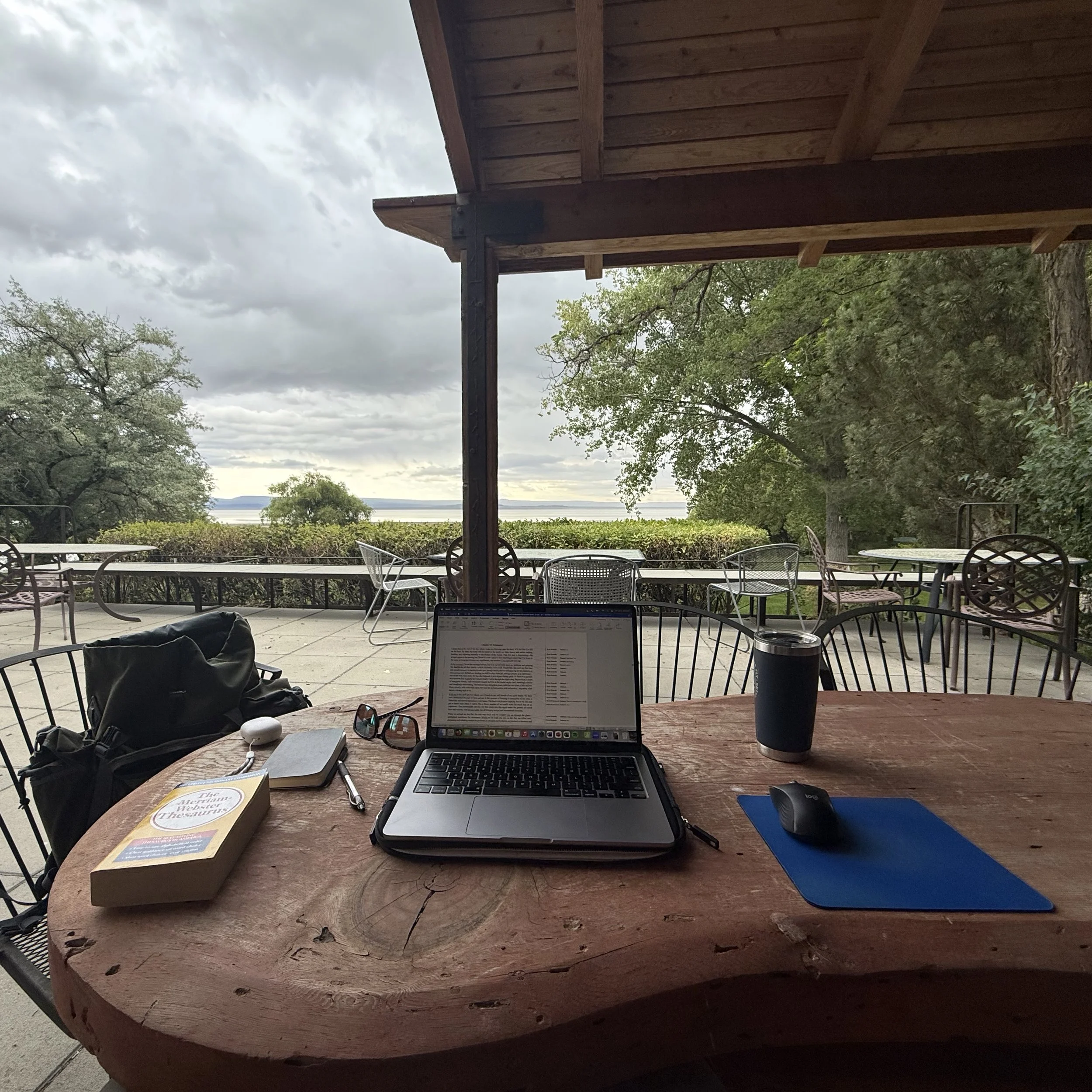
Writing at PLAYA Summer Lake.
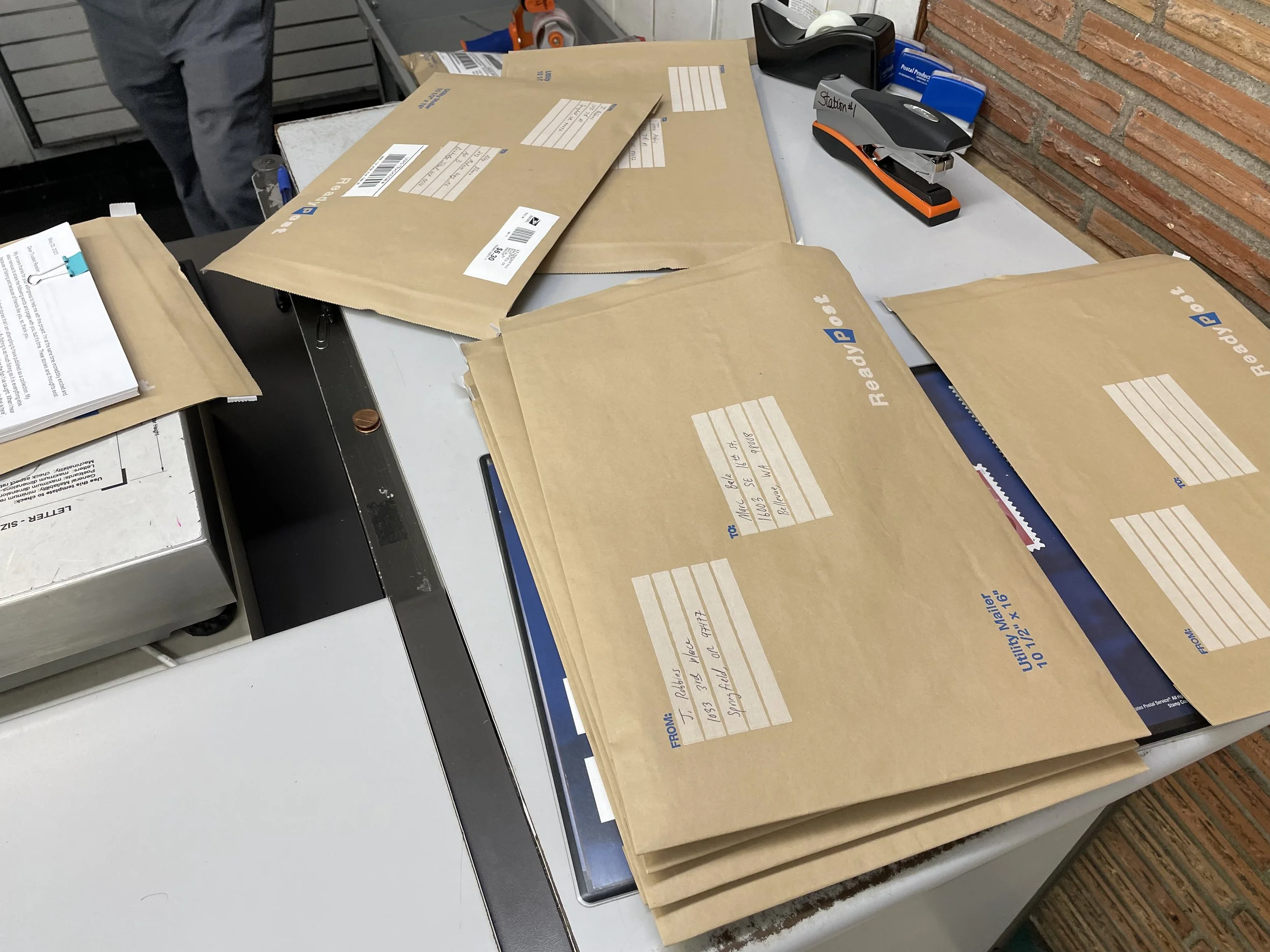
Mailing the first version of the manuscript to my Trusted Readers.
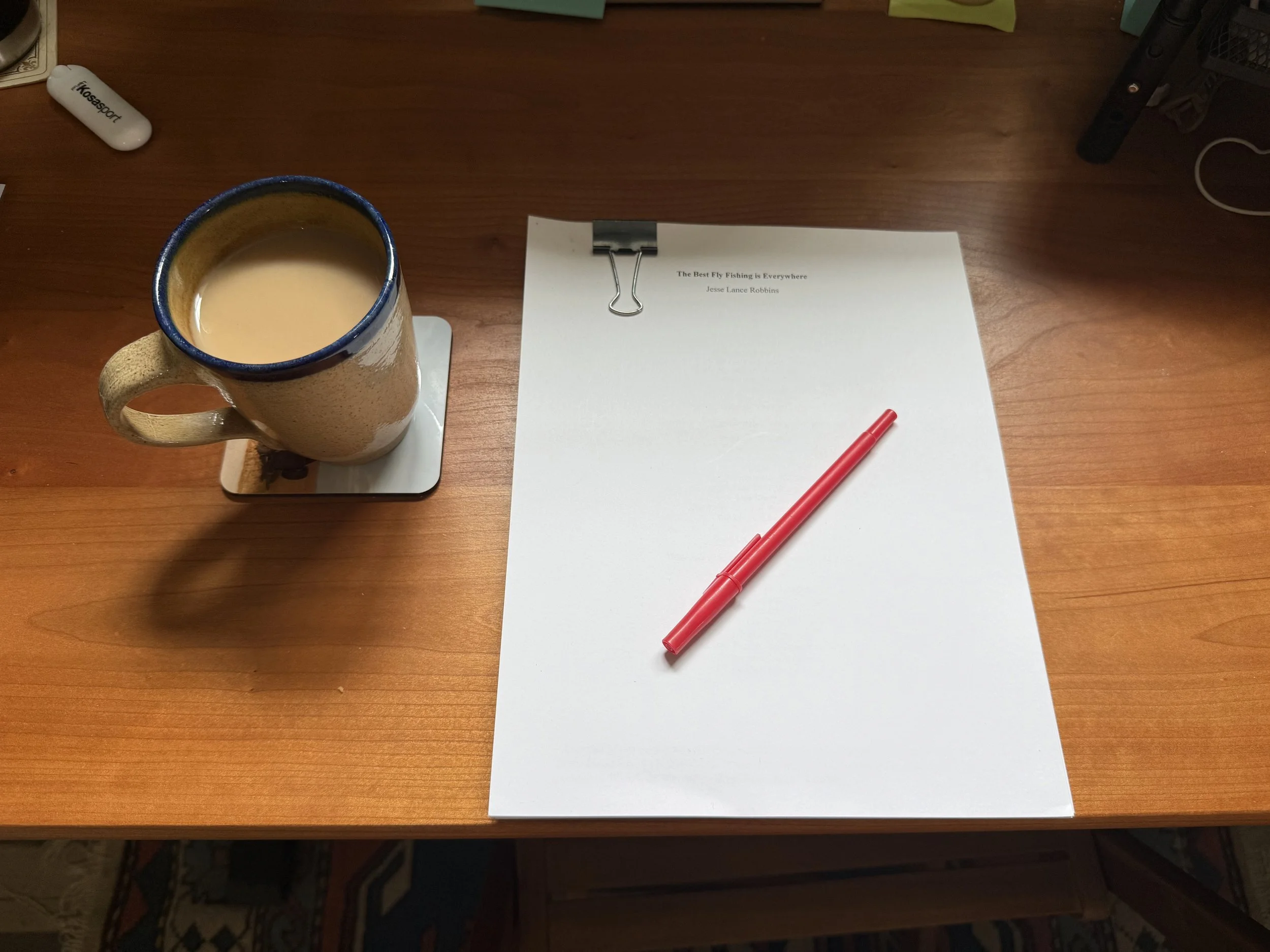
Final manuscript edits.
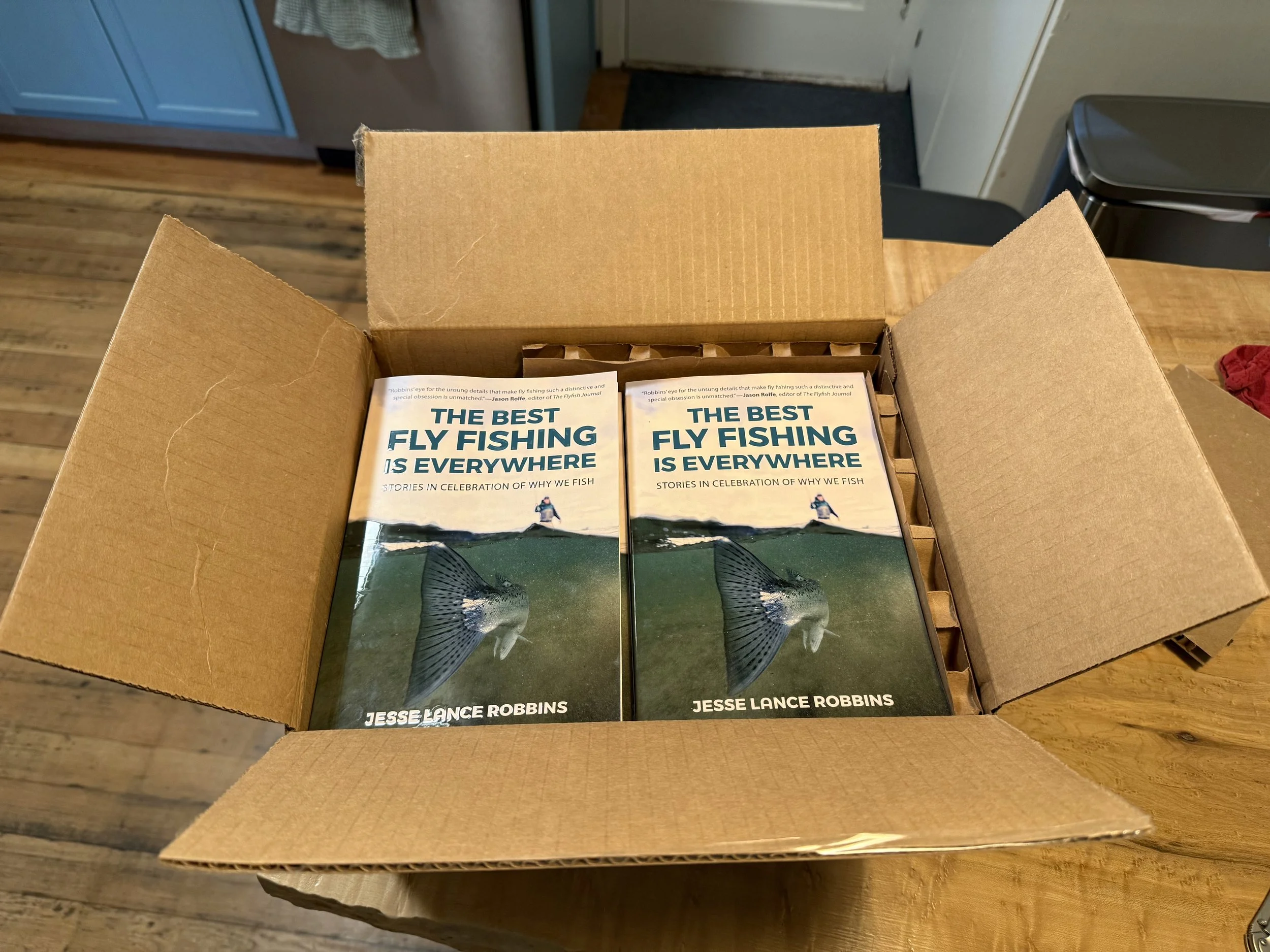
The first books arrive!
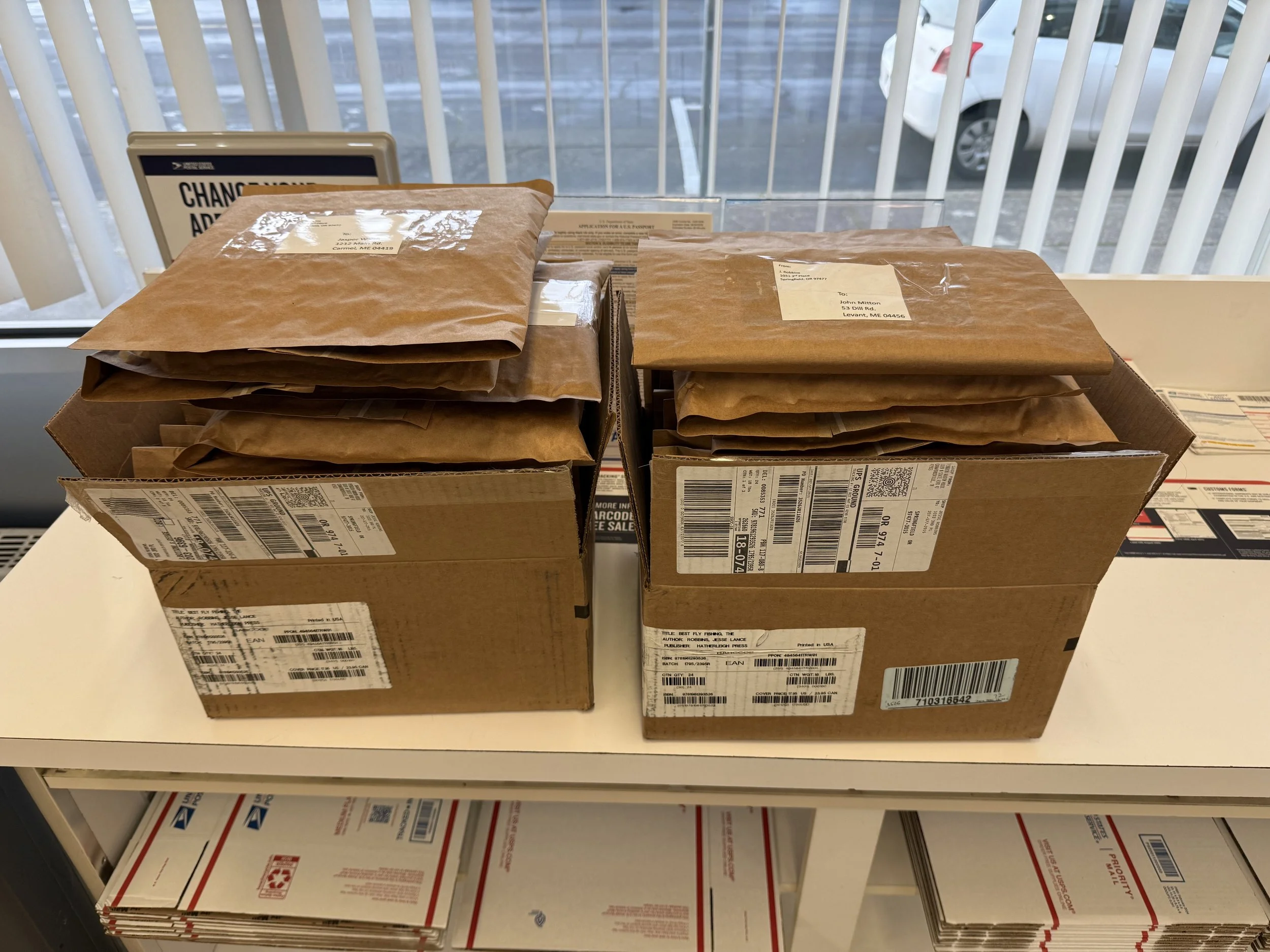
Mailing books to family and friends!