Spring Fishing ‘Report’
This year’s spring trout fishing season in Oregon started in late-March. Since then, I’ve been fishing with friends on my local rivers as often as schedules allowed, conditions notwithstanding. Fishing has varied from very slow to very good, and averaged somewhere between. In short, every day has been worth it, and has undoubtedly outweighed the alternative of not going out. There have also been numerous days that I have stood at the window in my garret, or stood at the back door of our house, and looked longingly at beautiful clouds, envisioning the happy bugs and fish surely making hay in my absence.
Here then, in no particular order, is a summary-of-sorts of what transpired while on the water, oars and rods in hand this spring – what I can remember, at least.
Summer fishing begins soon; late-June, I believe.
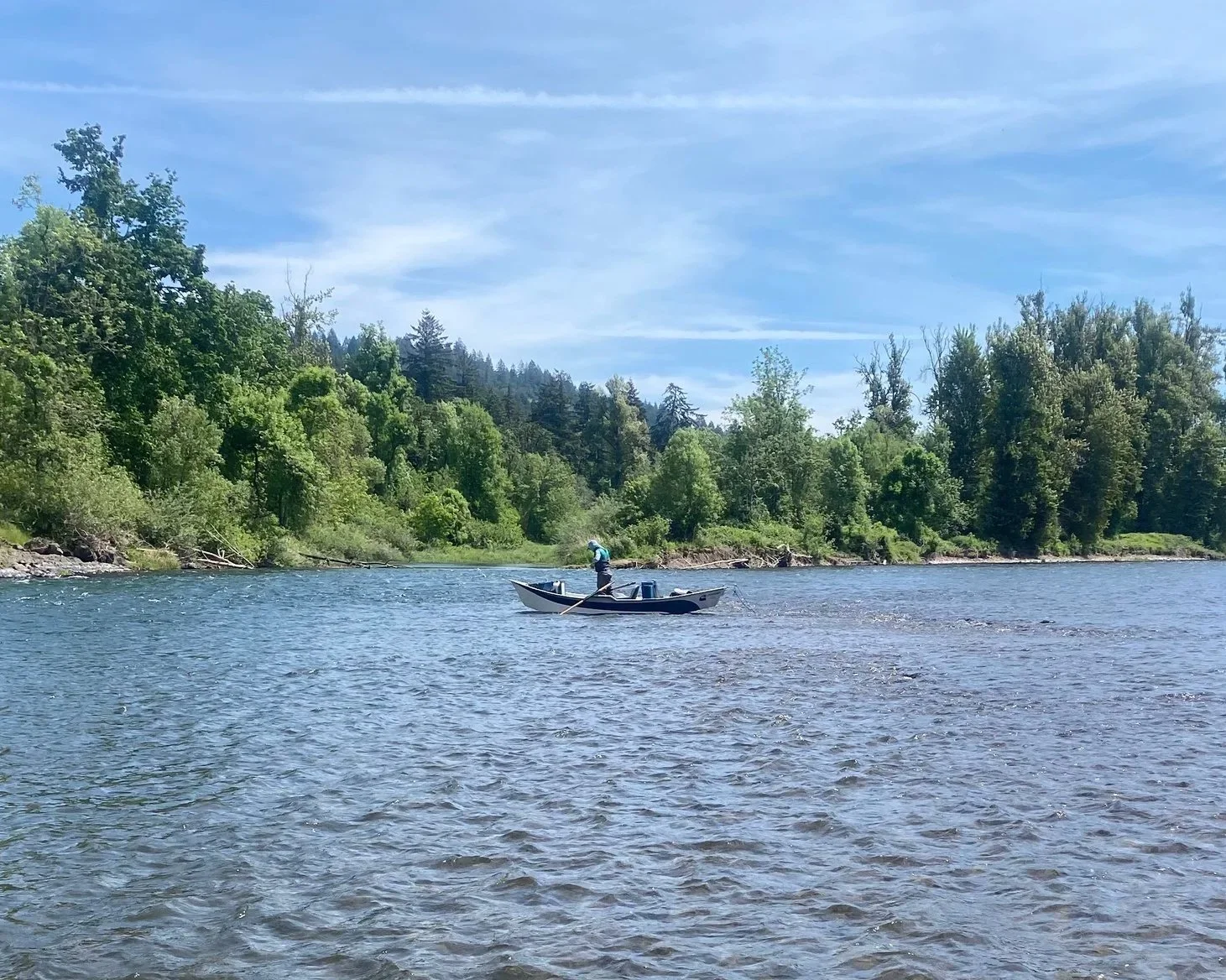
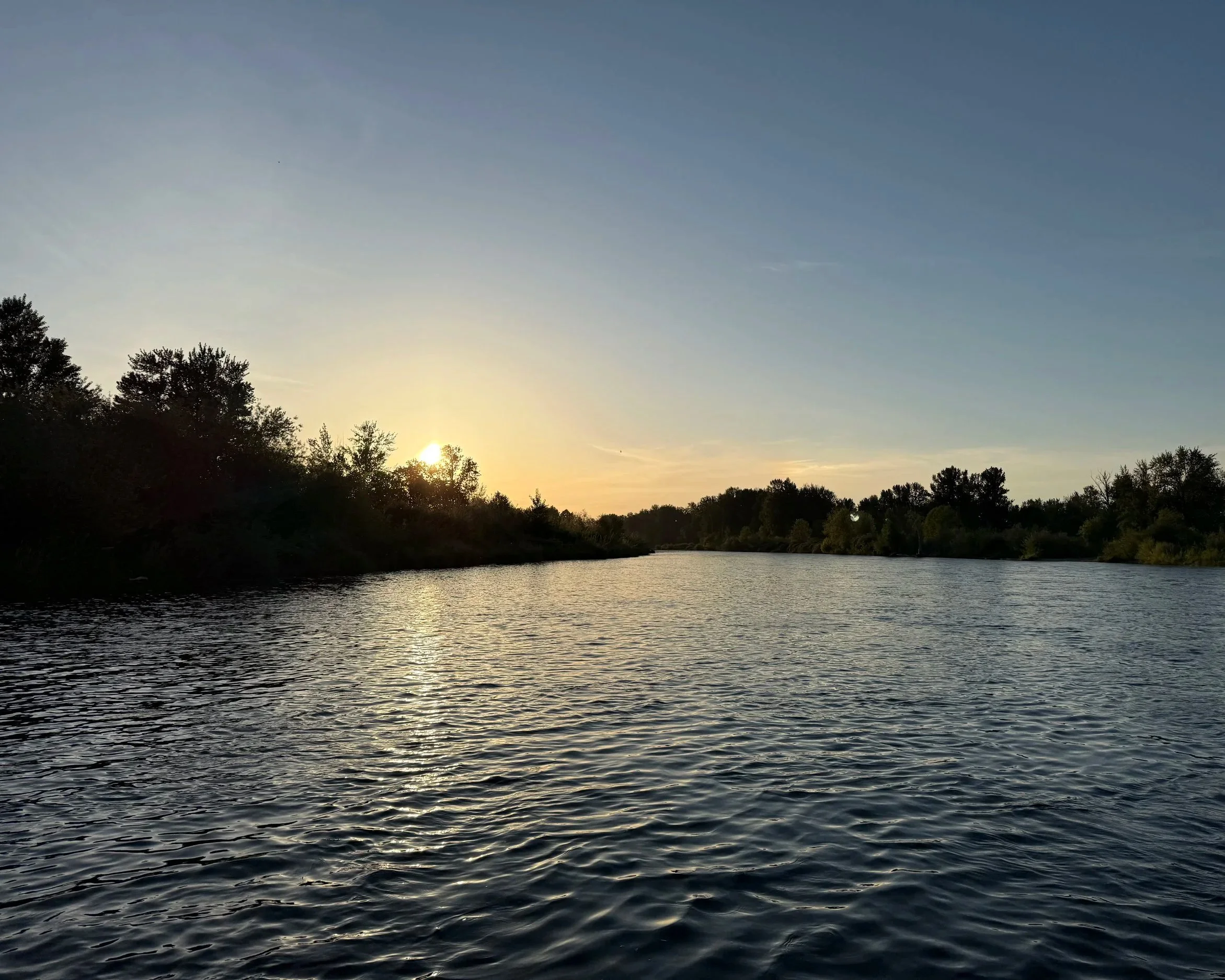
After several years of threatening to do it, one local, veteran angler and I finally went fishing together, electing to deploy his jet boat on the lower river. Did you know that jet boats can journey both up- and downstream? I was aware of this fact, but hadn’t considered the important implications: you can be where you want on the river when you want to be there! It had certainly been a while that I ventured away from the boat launch as the sun began to set.
We fished a single, giant riffle-run together that evening, each of us in our ‘zones’ physical and mental. Upon arrival, we made ready by inhaling a few last snacks and discussing our intended approaches. Rises were sporadic, so we both decided to begin with soft hackles. He handed me one from his box, and so I returned the favor with a recent tie of my own. Then we climbed out of the boat, eyed the riffle-run, and performed the ancient calculus of deciding who will go one way, and who goes the other. Maybe because the water looked great in both directions, or perhaps because we each preferred what the other didn’t, but without debate, we started walking our separate ways, both content.
Several minutes later, hearing splashes from upstream, I turned and saw him landing a fish. The day’s last, direct sunrays fell on him and the rainbow trout both, and the rippled water reflected back at me like a disco ball. I caught a brief whiff of smoke from his cigar, and it mingled with a pocket of cool air, influenced undoubtedly by the falling sun and air temperature. The scent and sensation mixed as if campfire smoke from a wintertime bonfire, and I zipped up my vest as far as it would go.
“On your fly!” he yelled.
“Wanna fish tomorrow? Could be wet,” I posed to another new friend in a text message.
He responded a moment later: “Absolutely!”
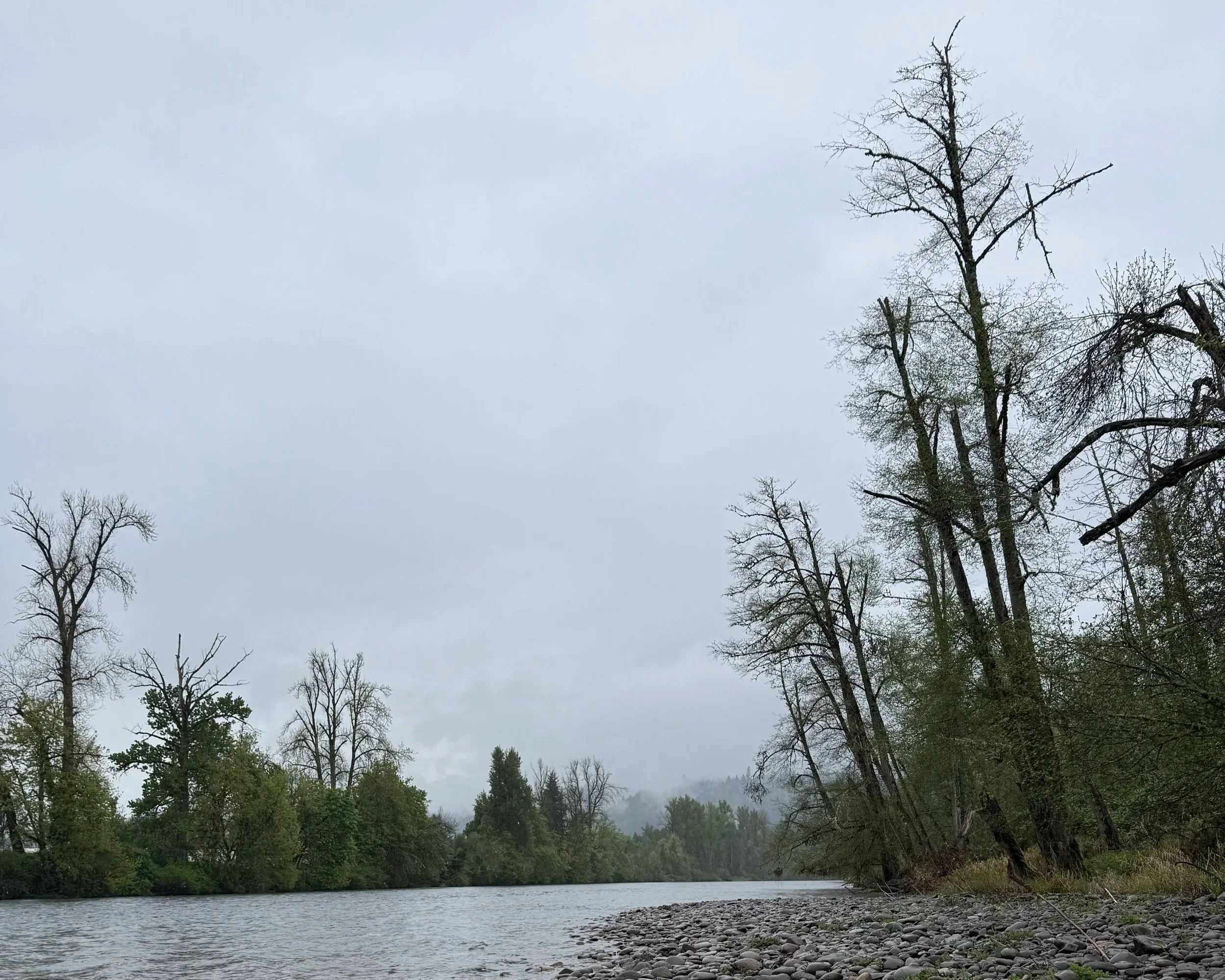
It wasn’t raining when we met at the take-out, but it started when we got on the road, poured for a few minutes, waned at the put-in, and then stopped completely when we dropped the anchor at our first spot of the day. We waited and watched – for bugs, for rises, for signs. We saw a few of the former, none of the second, and lots of the latter: we saw lots of water we liked the looks of enough to fish.
A couple fish later and we were on the move, and so was the weather. Sporadic rises, but nothing much to target, revealed themselves as we floated. Clouds rolled in, and precipitation and wind followed.
Several miles downstream, our rain coats had become saturated and our hopes for a hatch had disappeared. But then, in the final, long flat before the last few bends of the float, I thought I saw a rise. Rain pelted the river so I second guessed myself, until I saw another, and another. I’ve seen good hatches occur in light and even mild rain, but I’m not sure that I’ve seen a hatch as heavy as heavy rain. Somehow, in opposition to the downpour, blue wings steadily rose from the surface and into the air, and the trout were on them.
We set up on several rising fish, then dropped the anchor for what would be the last time. Three fly changes and we had it: size 18 Purple Haze. We traded the rod back and forth a few times, each brought a fish or two to hand, and then it was over.
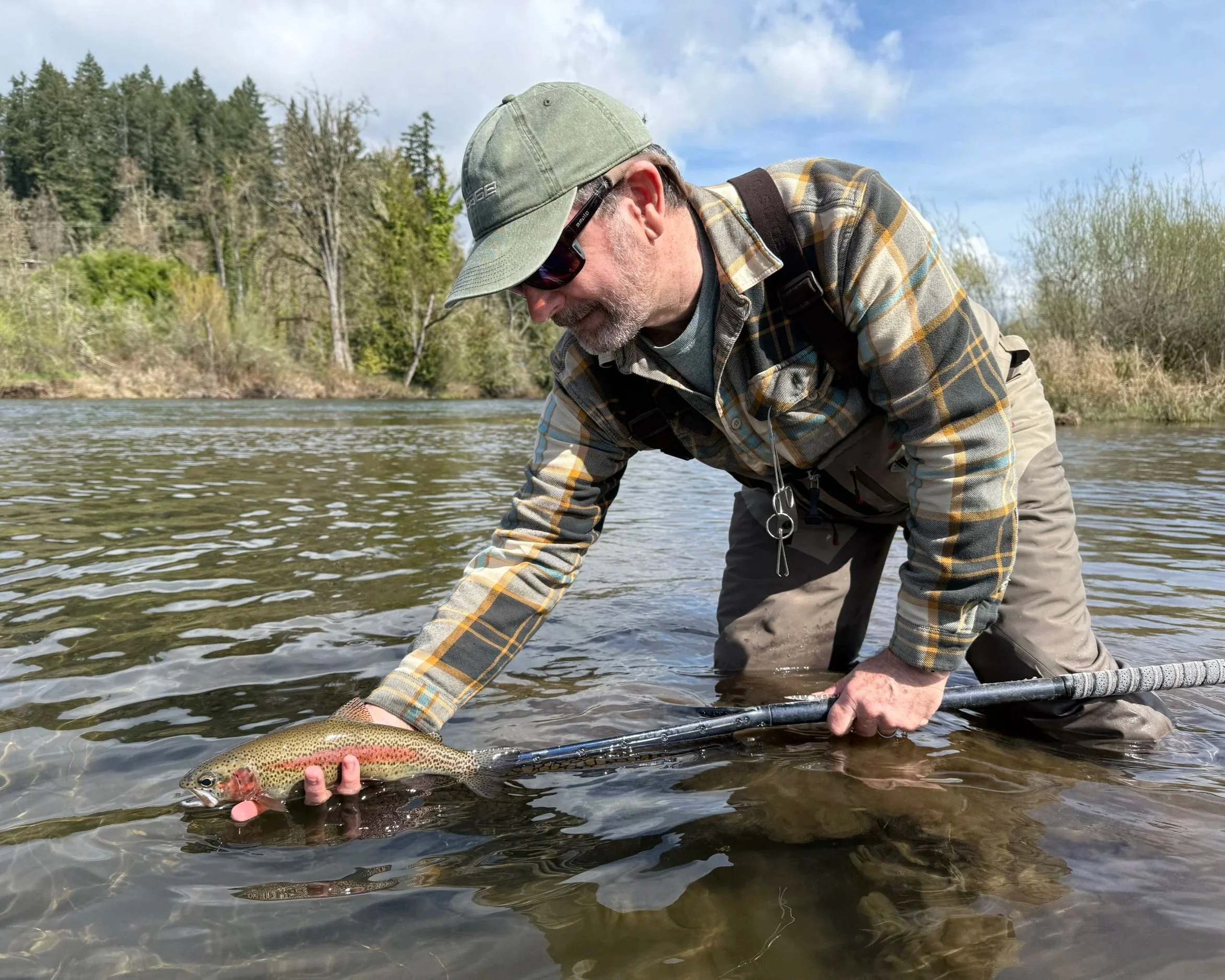
Connected by mutual fishing comrades, I fished with another new friend and recent transplant, but longtime guide and angler whose homewaters have been the Florida Keys. There, he had guided and fished for the grand slam species for several decades. And while it was his first time on the local river, it was far from his first venture on trout waters, for he had guided in Montana for many years as well. Our approaches clicked immediately, and he caught a couple on a streamer while on our way to a particular spot that I’ve enjoyed for several seasons now.
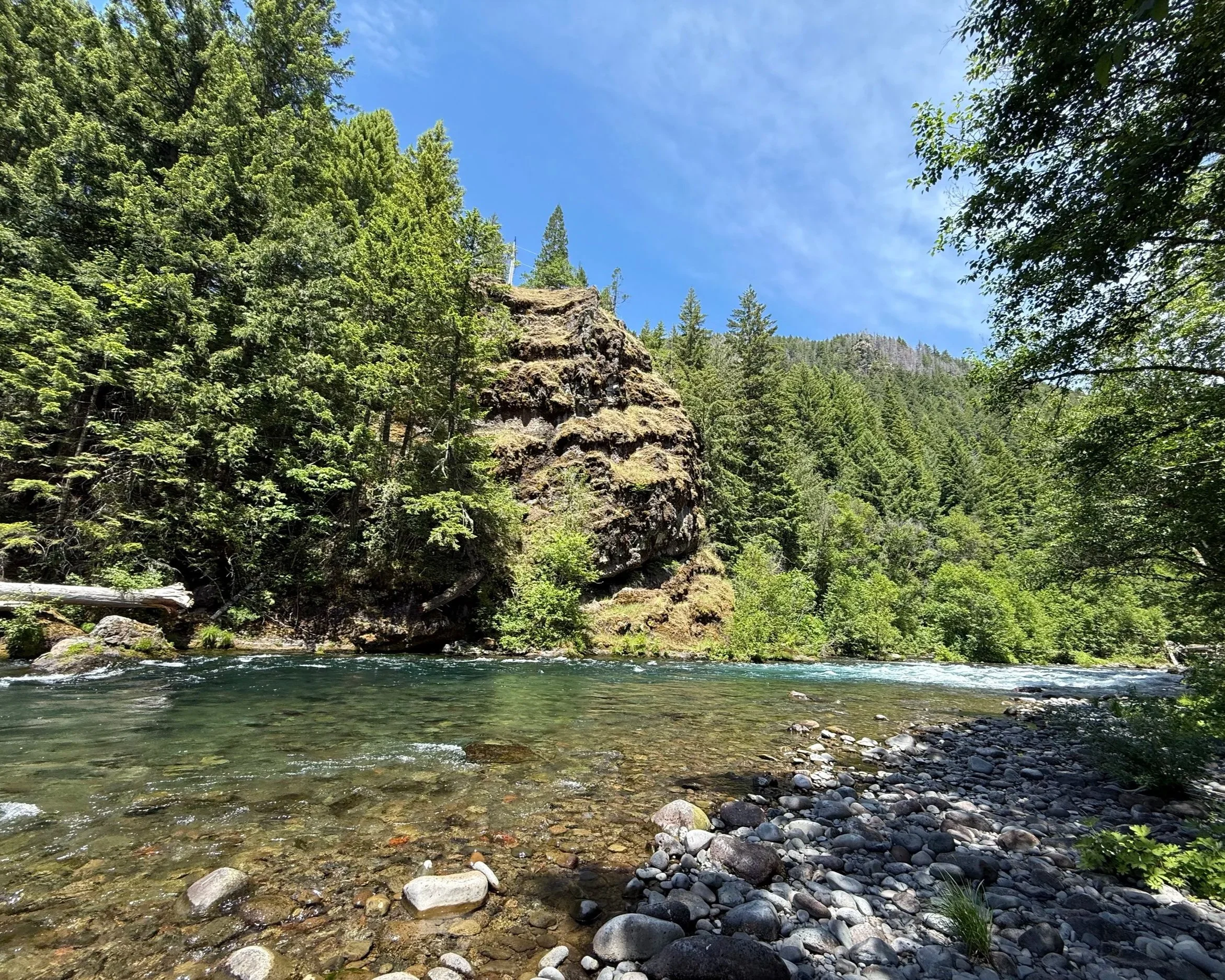
Our timing was good, and as we positioned the boat to drop the anchor, we watched fish rise consistently in the small side channel that meets with a larger braid before deepening into a lovely little bucket that screams Fish here! I forget who chose the specific pattern, but a caddis of modest size and familiar color was selected, treated with floatant, and cast. A rainbow trout took it abruptly and, I presume, happily.
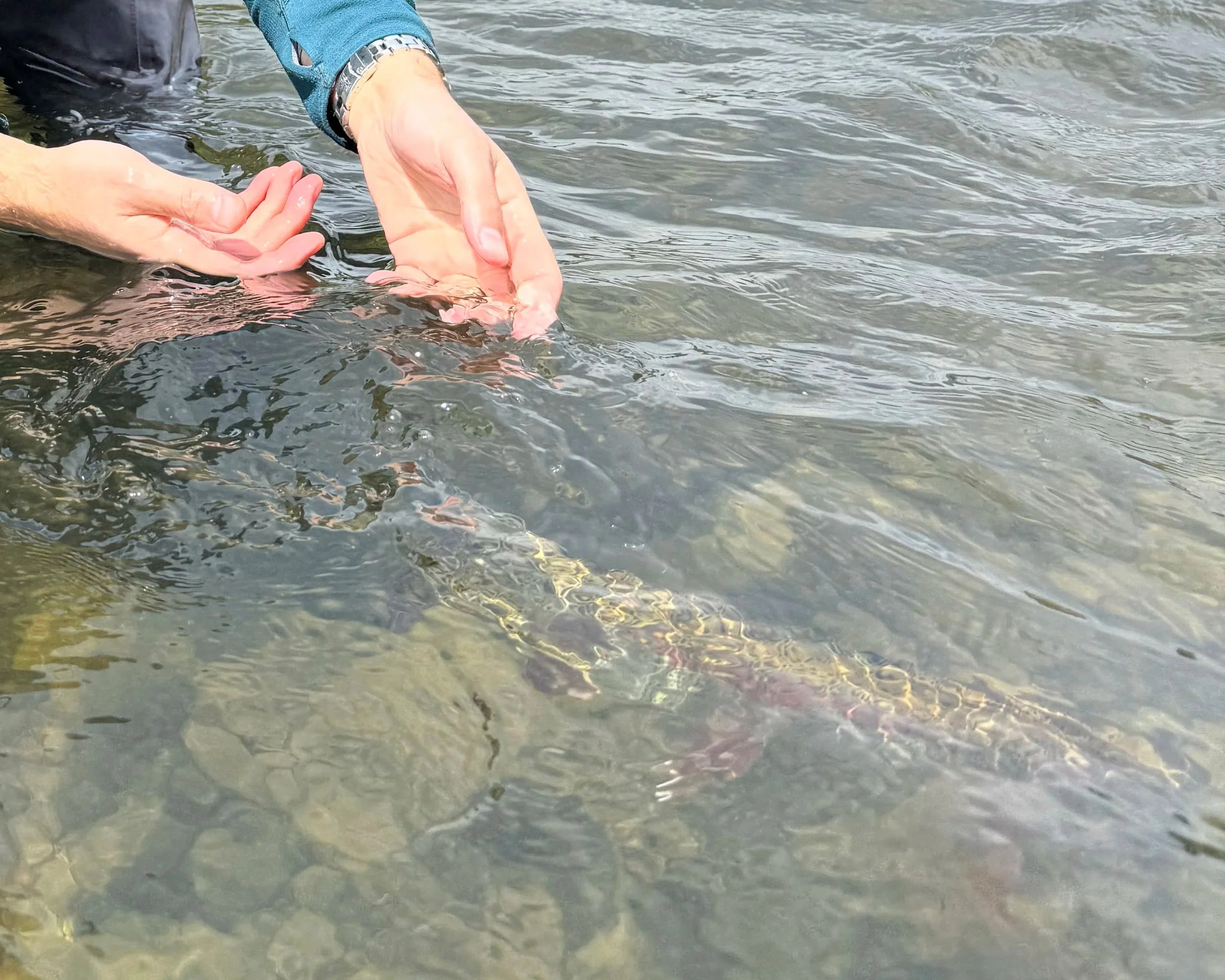
I don’t know how long it had been since he last caught a trout on a dry fly, and maybe he didn’t know either, but I could tell that it had been a while by the smile on his face as he admired it in the net.
“Beautiful,” he said, staring at the fish. And then he chuckled as it slipped from his hand back into the river. “Trout are so small.”
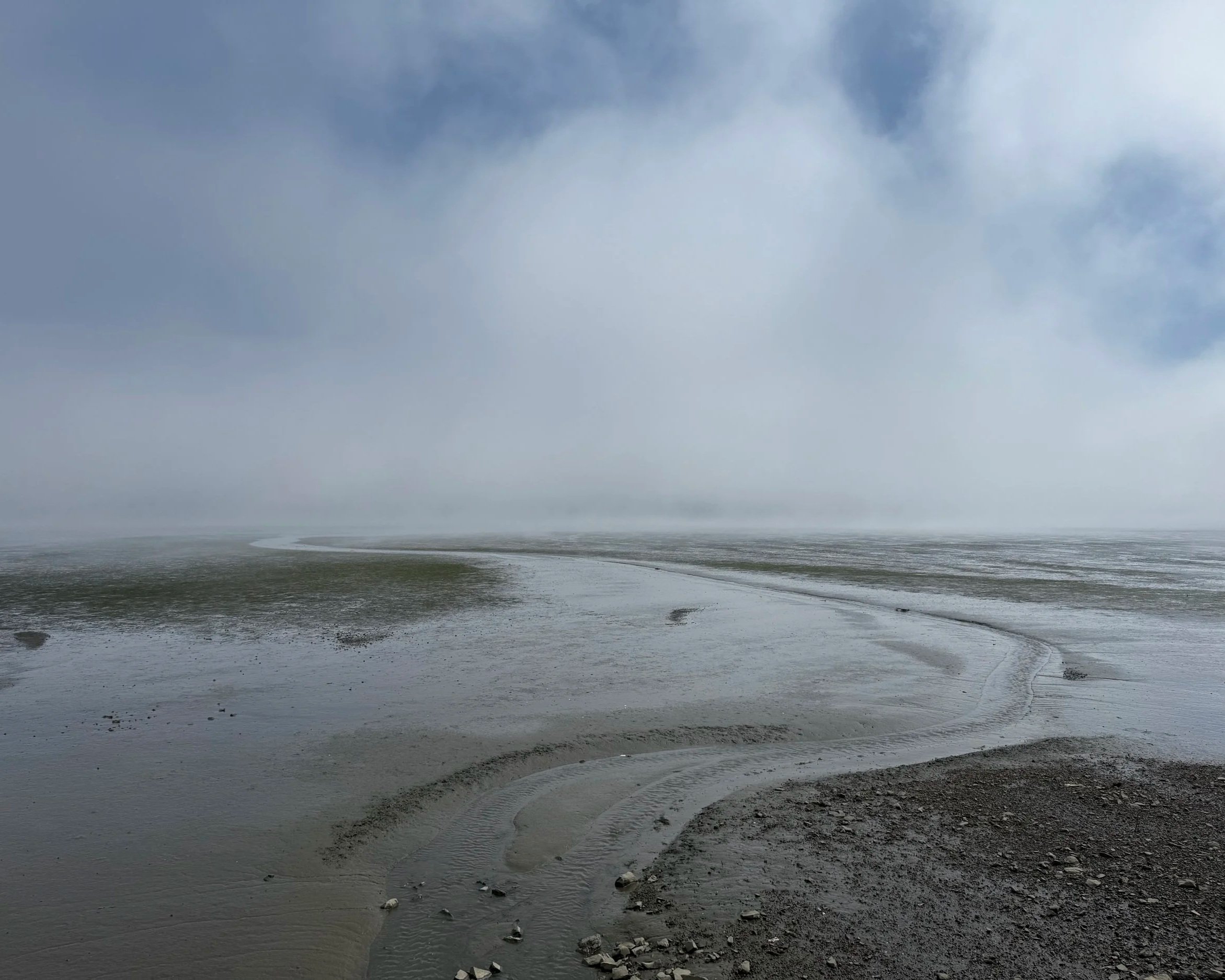
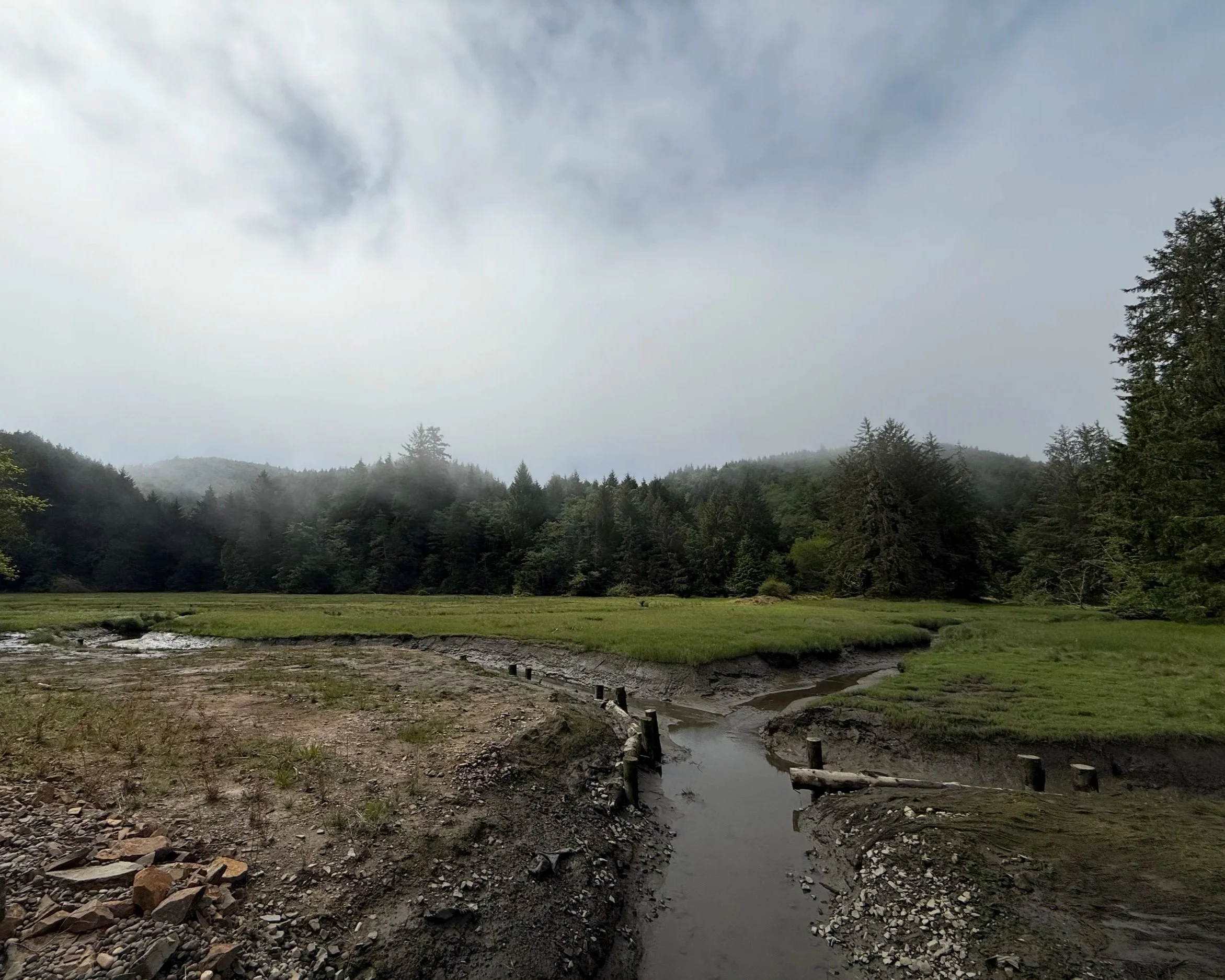
While on the Oregon coast for work, I was joined in the truck by two new friends and colleagues as we traveled from one habitat restoration site to another. As we got to know each other, our conversation bounced between our unique work-day-to-days, past and future fishing endeavors, life stories, the music that shuffled through the speakers, and the like.
Because of all the excellent and fascinating facets to fly fishing, I think there are many ways to be ‘fishy.’ Any good guide holds this quality (among others) as a function of their time on the water and their requirement to instruct others – often less-experienced – on how to catch fish. The study and practice of the fly cast, including corresponding tackle – rods, lines, leaders, etc. – is another way. One might also study entomology, and develop a mass of understanding about the types and forms of insects that trout feed on; or perhaps study other fish food and their predators (i.e., crabs and shrimp for permit). The well-traveled, frequent destination angler also gains this trait in their pursuit of numerous species across varied situations and environments. Or, maybe you’ve learned your home water(s) so well that by now, you just know when to be where, and why. There are other ways as well.
But there’s another form of fishy that I’m starting to wrap my head around: an environmental kind of fishy. It’s possessed by scientists, biologists, engineers, hydrologists, policy experts, and other career natural resource professionals, broadly stated. The two riding in my truck that day were this kind of fishy.
One was in the middle of a thought or a story related to the topics previously mentioned, when all of a sudden he interrupted himself.
“Beaver dam,” he said, while nodding out the passenger window.
And then continued telling his story.
I’m beginning to understand and embrace the implications of that beaver dam on the environment, fisheries, and fly fishing. And even though my new friend made the statement nonchalantly, I know that it carries as much weight as “There’s a rise,” “Look at that bucket,” or “One just rolled,” or something similar.
[If this topic interests you, I recommend this Fish Untamed podcast epidode which features Ben Goldfarb, author of Eager: The Surprising, Secret Life of Beavers and Why They Matter.]
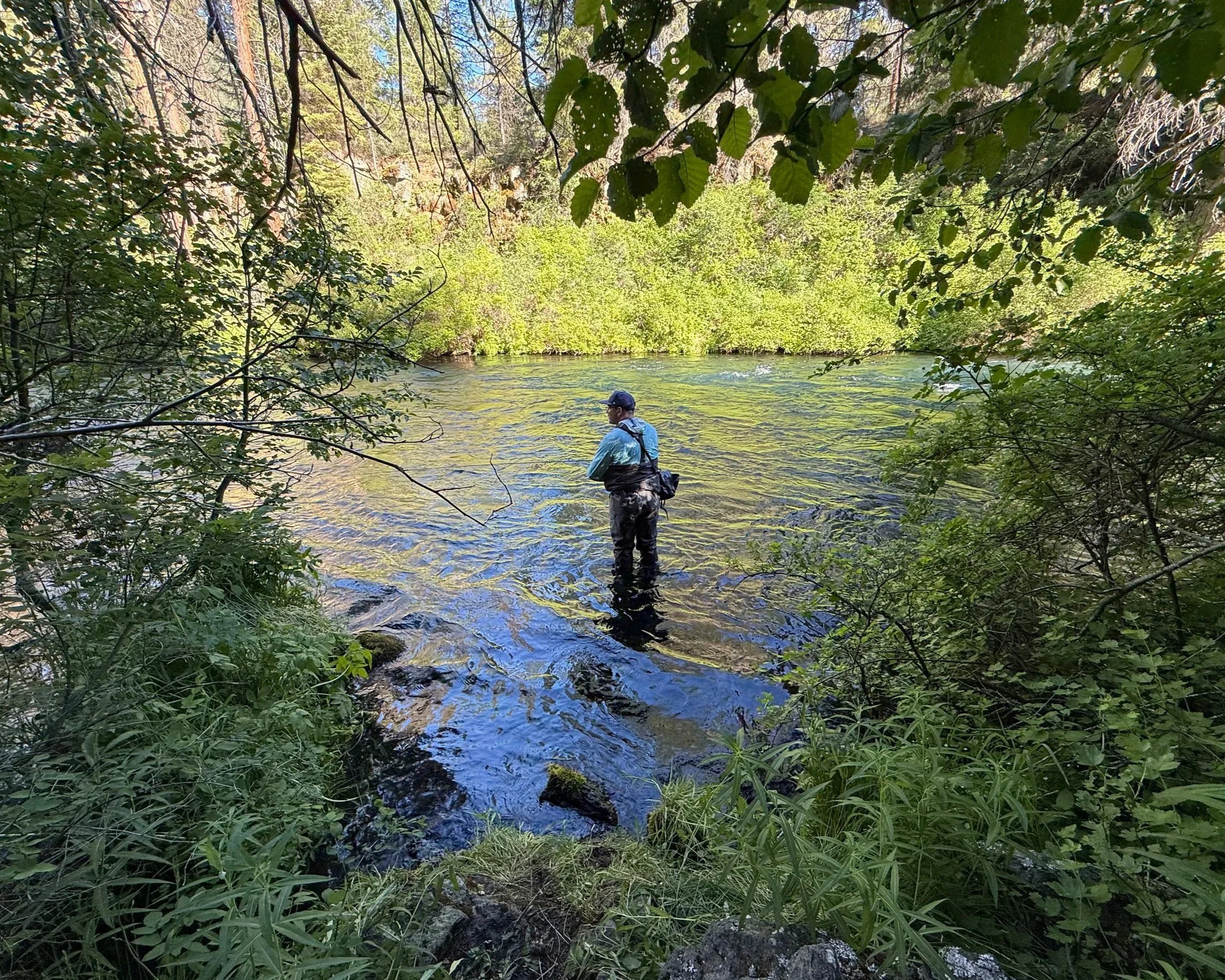
Within one of the beats in town, there’s a particular spot that holds my attention for extended periods of time – when I’m there, and when I’m not. I first floated through it several years ago, but have come to know it much better this year. It’s a giant riffle, to put it plainly, and there’s no fewer than six spots-within-the-spot that can, do, and will fish well, depending on the day and the timing.
One late-morning, a friend and I spent a couple hours there on foot, out of earshot from one another. Given that they weren’t moving far from the spot they were in, I assumed that they were seeing the caddis and rising fish that I was; I was only a couple hundred yards away, after all. But when they finally came back downstream and we had a chance to share our findings, it turned out that all their action – which was enough to hold their attention for some time – was all sub-surface. By the time we finished chatting, the fish in front of us started rising again, and my friend stepped in for their turn.
A week prior (or was it a week later?), another friend and I also spent a couple hours in this big riffle, passing the rod back and forth after every single rise or hooked fish. The constant shuffling in the boat became quite tedious, and I’m not sure why we didn’t just get out.
A few weeks prior to that (or, was it another week later?), yet another fishing friend and I were anchored up on the other side of the river, nymphing the fast, deep water. They hooked a large rainbow trout, which used its size, strength, and the current to its advantage to quickly and confidently make its way down the middle of the run, so far as to expose backing on the reel. The large rainbow that my friend caught downstream a few hours later made up for losing that first one at the net (I think).
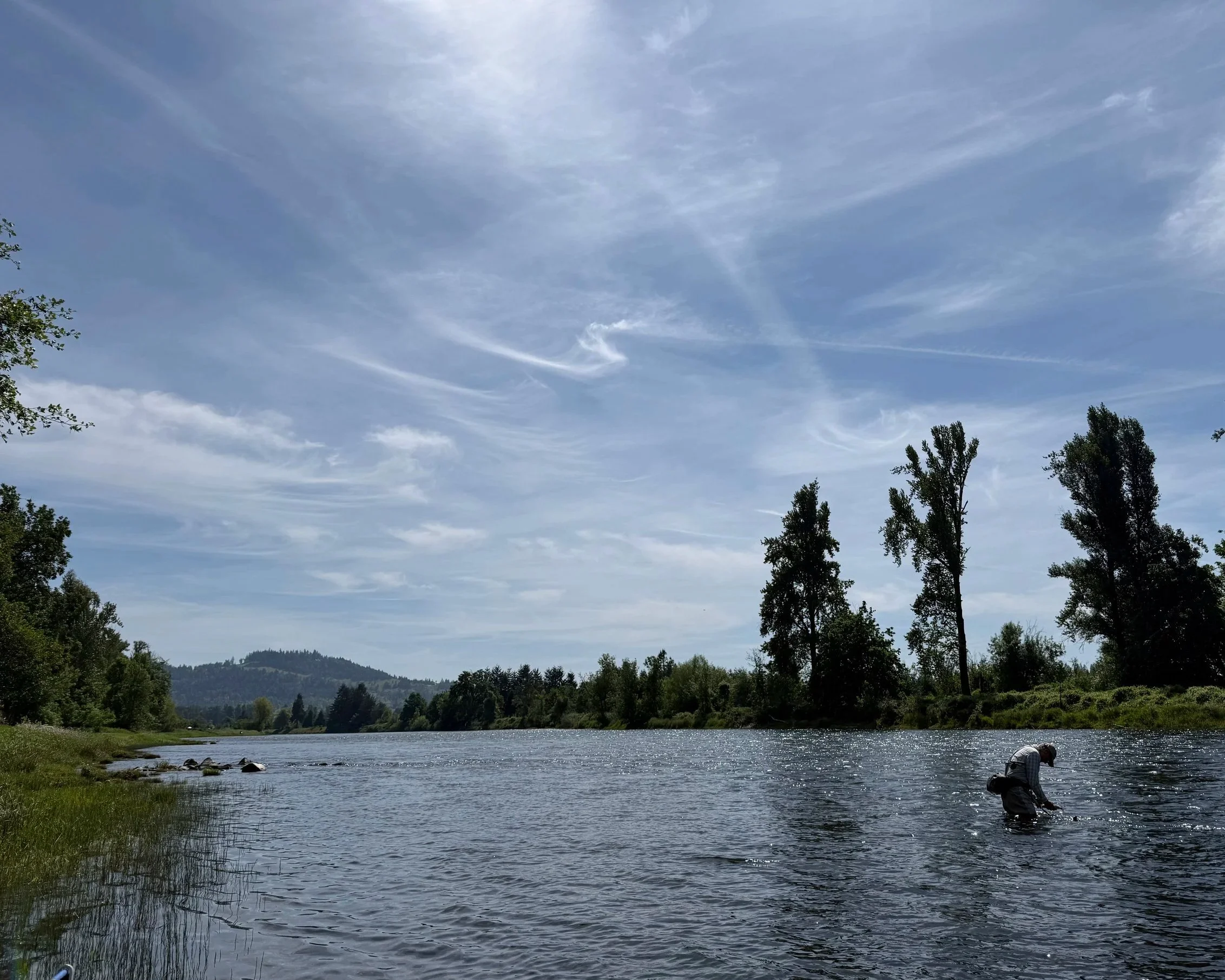
Then there was the day that every fish in the river was rising until lunchtime, at which point every fish in the river promptly stopped rising for the rest of the day.
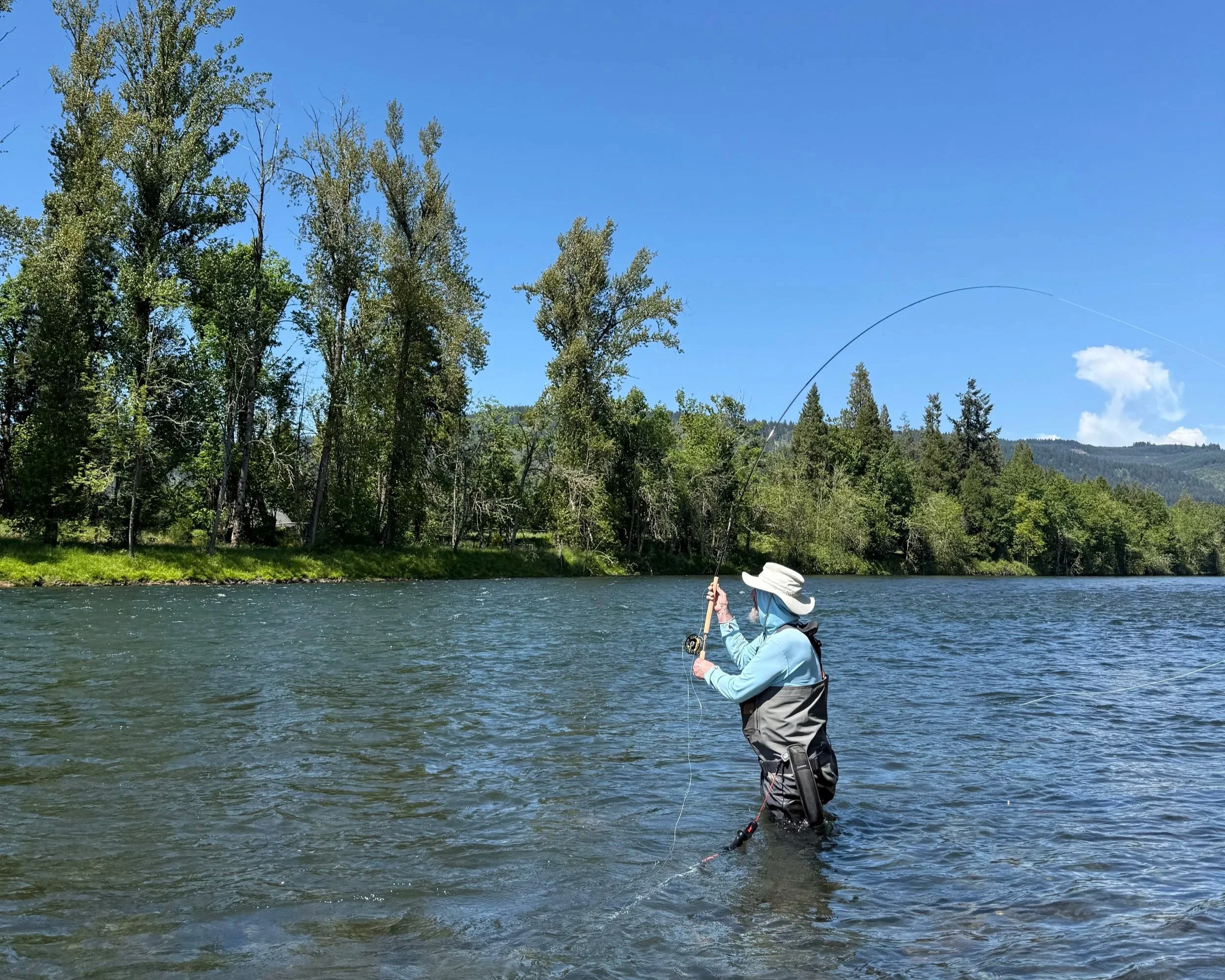
There was the evening we determined that our response to anyone we passed on the hike out, if they inquired as to the fishing, would be, “We should’ve caught them!”
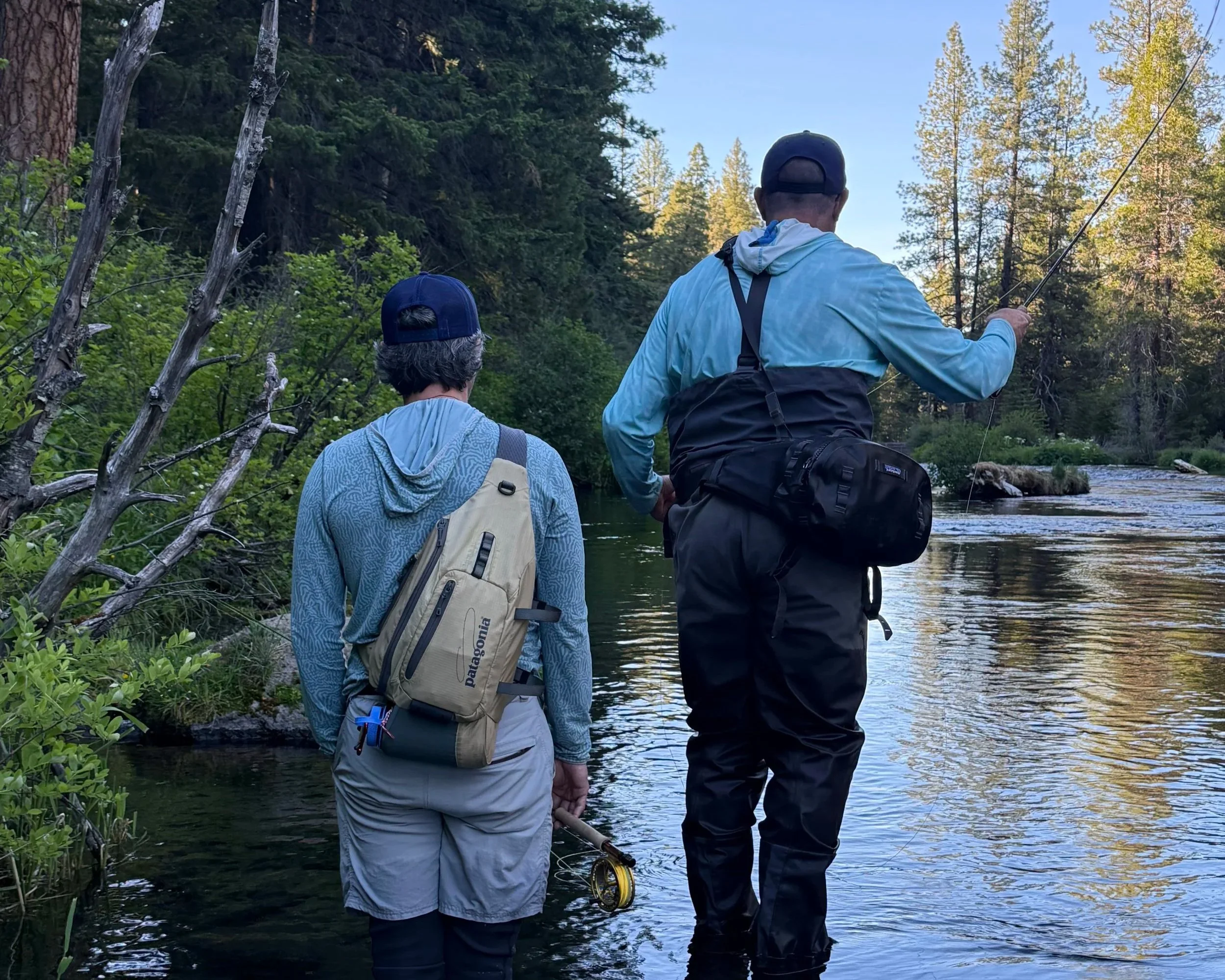
There was the cryptic, multi-species, evening masking hatch: while racing to the takeout so we didn’t get locked in, we both agreed that a Buff would’ve been a prudent accessory to have aboard.
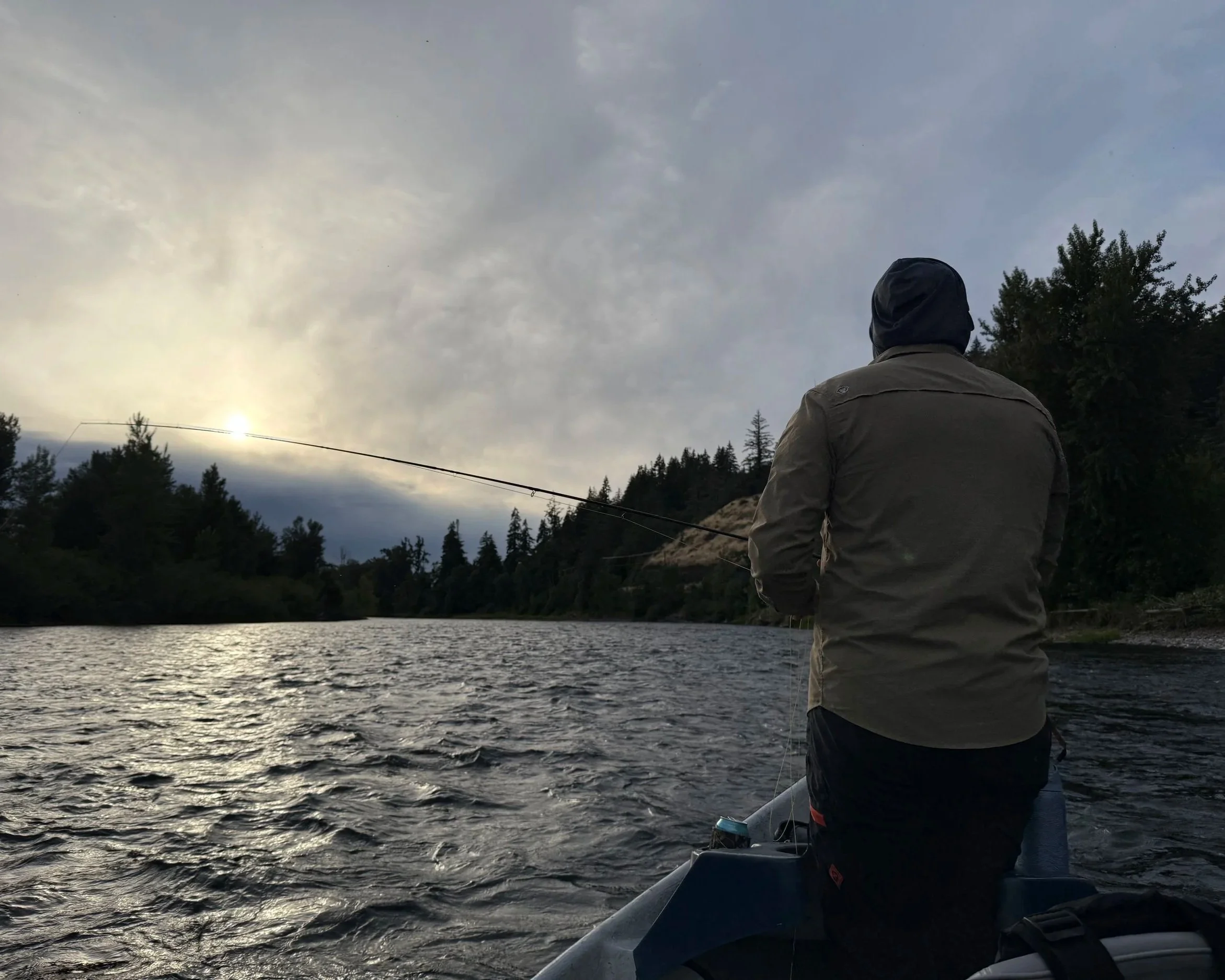
And there have been many, many other moments that are worthy of ‘reporting,’ but will go unmentioned here. We can’t mention everything, after all.
If you were there with me, thanks for coming.